Monday, August 22, 2005

Screenshots of Mac OS X Running Under Windows XP

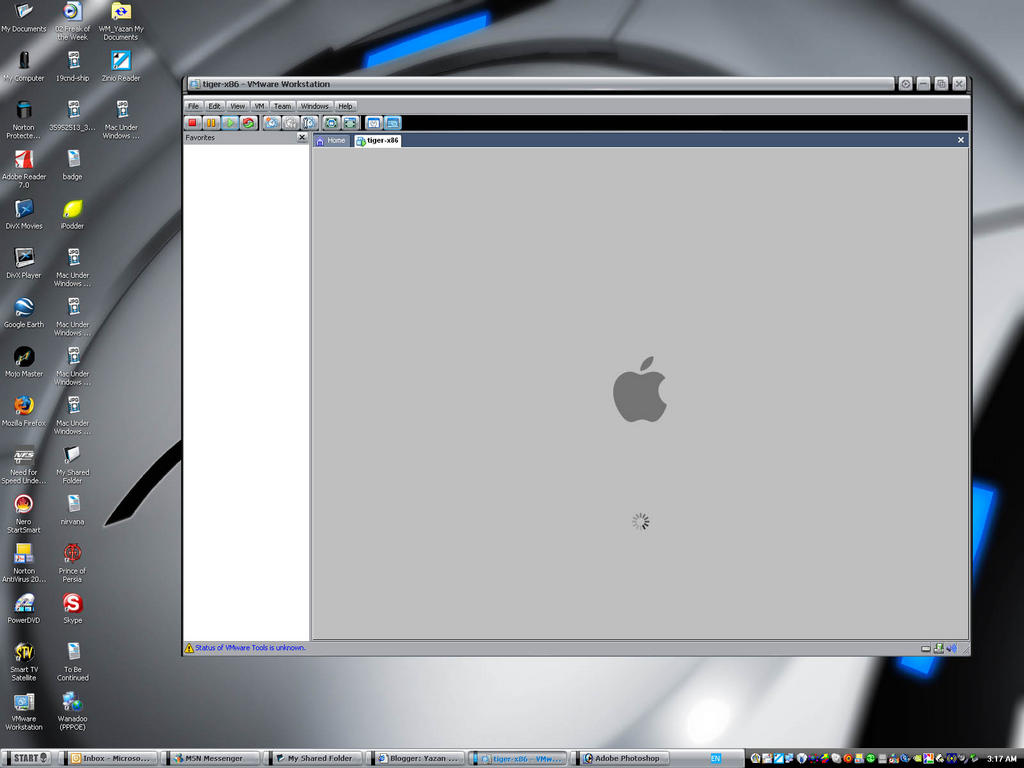
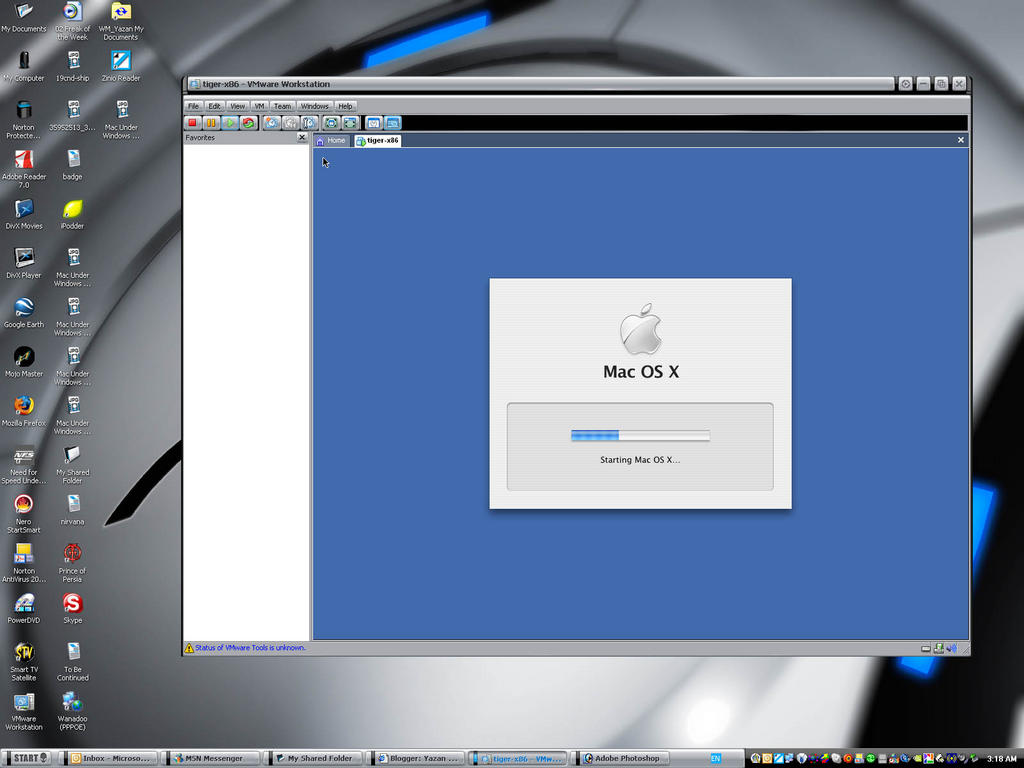
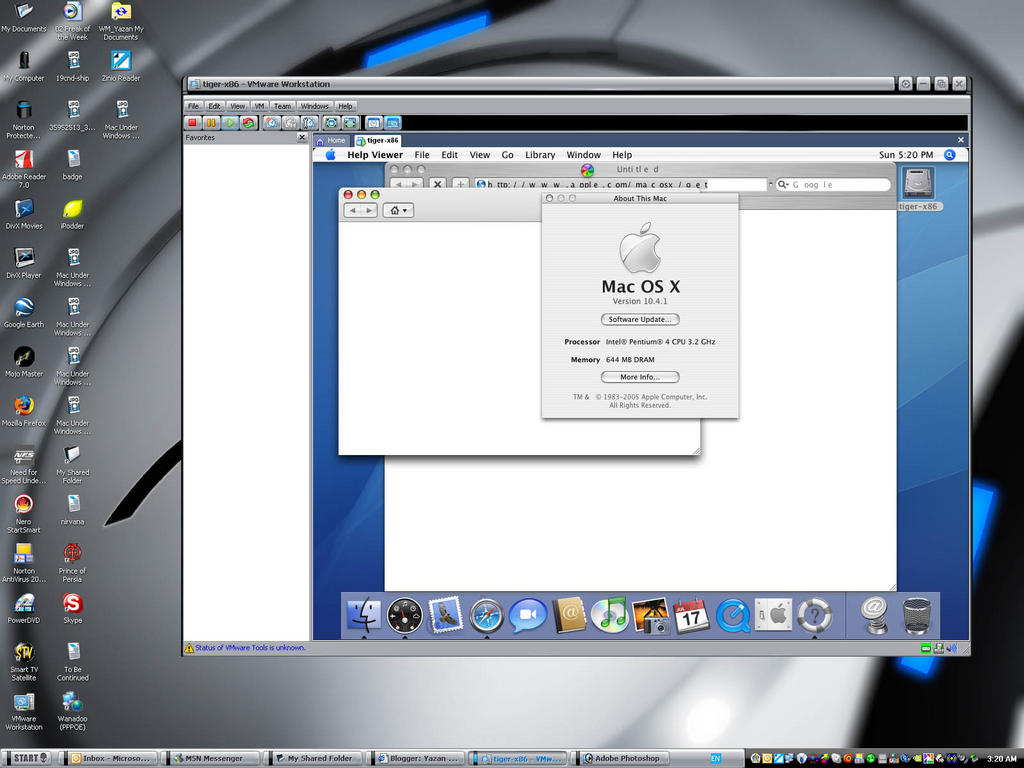
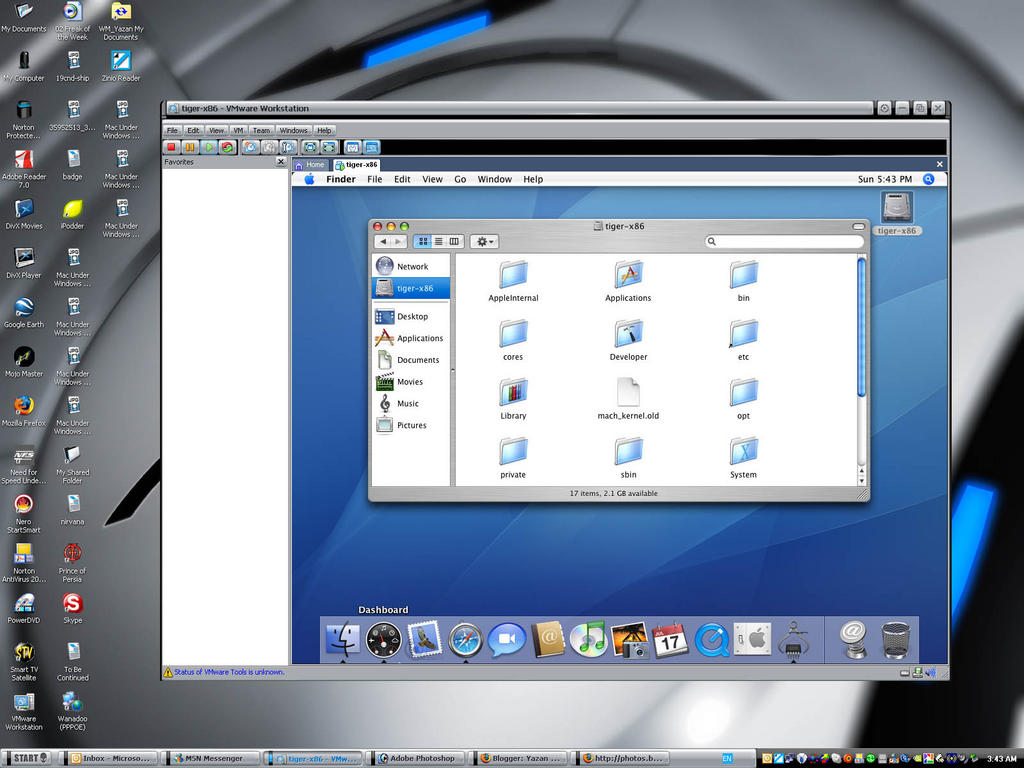
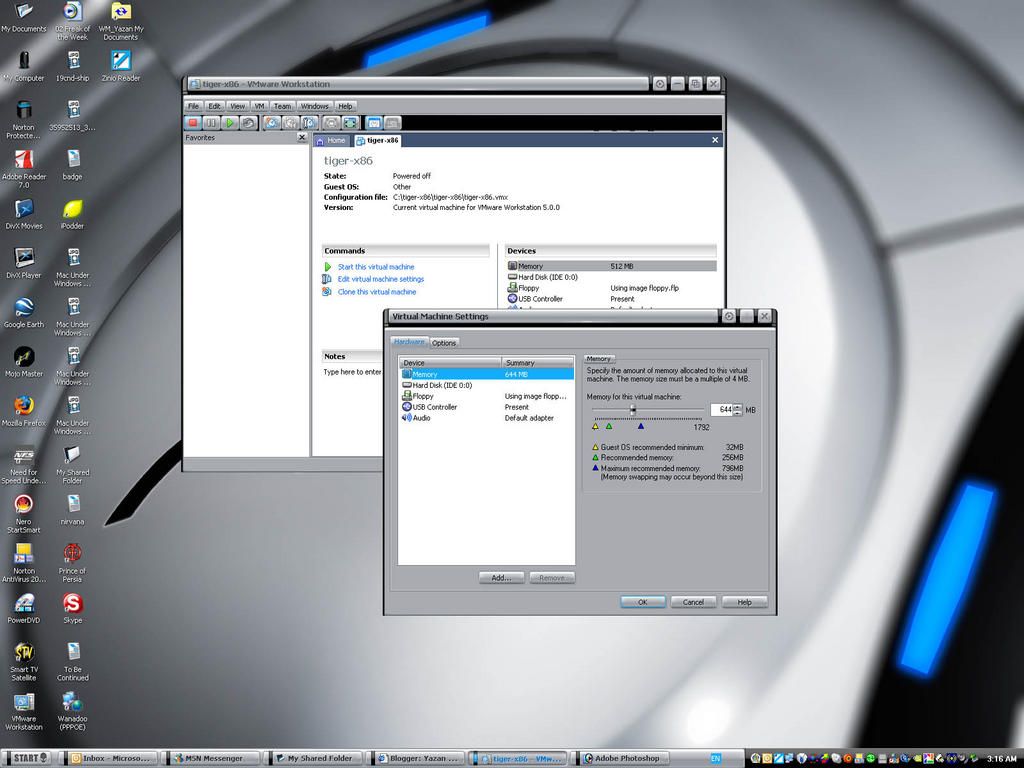
As I'm about to clone this into a harddrive (OS X runs painfully slow when emulated under Windows; although this can be fixed.), I thought I'd take a few screenshots. Behold, Mac OS X Tiger running under Windows XP SP2.. what word can be used to describe that? Setting up VMWare [Memory / Harddisk / Floppy Image / etc.] Apple Bootloader Firing Up Apple OS X Loading First Click On The Apple About OS X Advanced Diagnostics Harddrive Content Note: MacOS X On a sub $300 PC (Celeron 2.66 Ghz) can outrun a MacOS X running on a G4

Sunday, August 21, 2005

Microsoft patents Apple iPOD's Interface

Bloggers have dubbed Microsoft's move an "iPOD killer". If someone was talking bets, I'd wager that Apple never pays Microsoft a cent; bloggers and other tech pundits snickered at the prospect of Steve Jobs having to pay Bill Gates royalties on the beloved iPods. Back in 2002, Microsoft outraced Apple to the patent office to patent technologies that support the iPod's rotational wheel interface; after which it stated that it has a it has a long-standing policy of licensing its patents to others. Putting at stake the millions of iPods Apple has shipped. Fear not though Apple still has loads of options from a legal perspective; first Apple and Microsoft signed a five-year agreement in 1997 to share technology. When the deal expired in 2002, the music-player patents in question may have been covered. Second; this is not a supreme-court decision, Apple can file a declaration stating that it invented the technology before Microsoft filed its patent request, as evidenced by the fact that iPods were already on the market at the time. In such a case the patent office will have to start an investigation and determine who invented the technology. For more on this check: http://news.com.com/Microsoft,+Apple+in+iPod+patent+tussle/2100-1047_3-5830435.html

Saturday, August 20, 2005

Geek My Run: Sneakers vault into the digital age

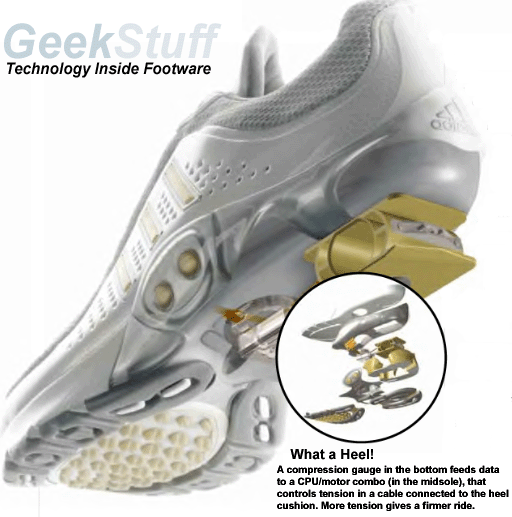
Shoes have seen countless changes over the millennia - from the grass stuffed goat and bearskin coverings of Stone-Age to Carrie Bradshaw's Manolo Blahniks. Sophisticated designs let athletes run faster and jump higher, but the unique hybrid Adidas shoes lept into the future. Computer hardware built into the $250 adidas_1 sneakers adjust cushioning levels for any runner in any environment, turning ordinary footwear into highly-enhanced digital running gear. Adidas_1 features a 20 Mhz microprocessor placed under the arch, capable of processing up to 1000 readings per second from the heel compression sensor. A motor receives command from the CPU and drives a transmission with a 1:50 ratio, turning a lead screw, that in turn adjusts a cable connected to the heel's cushioning element, when the cable is tighter, the element has less cushioning as a result. Lower tension allows vertical force to compress the element more. The mechanism uses power only when making adjustments. Besides measuring compression, the system tracks the time between peak readings, deriving other dynamics such as force, velocity, acceleration and deceleration. The two 3-volt CR2450 lithium cells will need to be changed after 100 hours of use, the company says the computerized parts will work beyond the shoe's 1000 kilometer lifespan. What's next? Presumably, GPS and bluetooth techology, hooking up the shoe to some analytical program that would give you information on your route, calories burnt, average speed.. and a designed for Windows XP Tag perhaps? hmmm.. Adidas_1 Official Website
Thursday, August 18, 2005

Mars, Earth - Closest Approach in Recorded History

"Planet Mars will be the brightest in the night sky starting August. It will look as a large full moon to the naked eye. This will culminate on Aug. 27, when mars come within 34.65M miles of Earth. Be sure to watch the sky on Aug. 27, 12:30 am. It will look like the earth has 2 moons. The next time mars come this close is in the year 2287. Share this with your friends as NO ONE ALIVE TODAY will ever see it again" I've been receiving this email from several parties during the past couple of weeks, unfortunately this email is misleading and nothing but a hoax, someone apparently resurrected an email message the circulated around July/August 2003, when Mars and Earth were the closest they have been in 60,000 years. Mars was indeed a spectacular sight in the night sky Fact is that Mars will pass close to earth once again in 2005, however it'll be at it's closest on October 31st rather than August 27th, and even then it will be 9 million miles further than it was in 2003 (34 Million Miles in 2003). That won't make much of a difference for the casual observer, Mars will still be a compelling sight at night. Claiming that "No one alive will ever see it again" is a little misleading; there will several other close encounters. Mars won't be as close as it was to earth in 2003 till 2287, perhaps our descendents will be observing the close encounter from a Martian Perspective Based On: http://science.nasa.gov/headlines/y2003/18jun_approachingmars.htm For some Martian Fun check: CBS Late Night Show

Serves me just right for rubbing it in

Coming late to the office can have dire consequences! My car has been hit, perpetrator unknown. Although not as serious as Rob with an A's hit I'm sure the price tag well be much steeper, especially since it'll be coming out of my own pocket. Just yesterday I was rubbing in the fact that she can no longer drive due to her accident, and here i have one. Fortunately rear sensors are still working. Me Car's BooBoo Perpetrator Unkown

Sunday, August 14, 2005

OSx86 Project: Mac OS X on a sub $300 USD Intel "White" Box

Your next Mac could cost you only $300 USD or less, and run faster than any G4 or G5 you've ever used. The future is already unfolding! Based on the Apple OS X x86 Developer Kit, the OSx86 Project offers a hack designed to over-ride TPM Chip (Trusted Platform Module), Apple's anti-competitve chip intended to prevent the system from running on Ordinary PCs and stifle innovation. By removing the TPM Kernel extension (AppleTPMACPI.kext) and writing the drivers (Known as Kernel Extensions) so that they can run your own Non-Apple-Gadgets such as Wi-Fi cards, VGA Cards, etc. Mac OS X can now be run on any x86 Box (Intel or AMD) that offers SSE 2, although you will need SSE3 if you plan on running Power PC Applications on Rosetta. Many believe (although I'm highly doubtful) that Apple wanted to demonstrate the weakness of TPM security, and may have plans to eventually license the operating system to PC Makers eventually. The setup can be done in 30 steps or less (if you happen to download a ready made VMWare image for instance) a guide on how to setup Max OS X on an intel box can be obtained from http://www.xplodenet.com/?p=guide the OS through BitTorrent, my test setup ran perfectly and much faster than a G4 with 1024 MB of RAM on a humble box I purchased primarily for testing Mac OS X, an Acer Power F2 (Intel Celeron 2.66 Ghz with 512 MB RAM) I wouldn't have believed it if i didn't run both systems back to back! Of course there are several reasons why you should wait for Apple to realease it's own Intel Boxes, the current legal-status of OS X intel is one, and the uncompleted developer nature of OS X for intel is another. For more information you can check: http://osx86project.org/ http://www.osx86.classicbeta.com/wiki

Saturday, July 30, 2005

Open-Source Beer! Free Beer for Geeks!

Beer always tastes better when it's free, or so the saying goes. A group of students at the IT University of Copenhagen find a way to make sure their beer is free. Well, at least the recipe they use to brew it is. The recipe and brand of their beer is published under a Creative Commons license, which means anyone can use the recipe for pleasure or profit. The only catch: If you make money selling their unique beer, you have to give them credit and publish any changes you make to the recipe under a similar license. Although not an open source fan myself. I find the idea to be inspirational if not revolutionary, it's quite interesting when someone takes an Analog Product, for the lack of a better term, and apply an open-source structure to it This would actually provide a way for several skeptics in the IT Industry (such as myself) to see if a product out in the open gets better as it travels from one hand to the other. For More Information check: http://www.voresoel.dk/main.php?id=70 http://creativecommons.org/